Attribution Creative Commons Noncommercial No Derivatives Share Alike Zero

Bokep Tobrut Vivi Sepibukansapi Mendesah Pas Di Ewe Cracked May 2026

Channels like (run by celebrity couple Raffi Ahmad and Nagita Slavina) have turned their family life into a multi-million dollar empire. Their content—ranging from luxury car tours to "prank wars" with neighbors—blends the aspirational with the relatable. Meanwhile, creators like Baim Paula and Atta Halilintar have mastered the art of the hyper-sensational thumbnail.

Why does this work? The "popular videos" segment in Indonesia relies heavily on . Indonesian families often watch videos together on a single living room TV streaming from a phone. Consequently, content that is loud, colorful, and features high emotional stakes (extreme laughter or staged drama) performs best. This has created a unique genre: the "Indonesian Family Vlog," a chaotic, high-energy slice-of-life that feels like a sitcom written by caffeine-fueled teenagers. Sinetrons and Web Series: The Drama of Life Television isn’t dead in Indonesia; it has simply evolved. The classic sinetron (electronic cinema) has migrated to streaming platforms, finding a second life as web series. bokep tobrut vivi sepibukansapi mendesah pas di ewe cracked

Popular videos on platforms like WeTV and Vidio often feature titles such as "Suzanna: Kliwon Friday Night" or "Pamali." These aren't just jump scares; they are moral tales. The structure remains consistent: a family moves into a cheap house, ignores a ban against cutting down a specific tree, and chaos ensues. This fusion of traditional myth with modern production values has created a niche that Netflix is now aggressively licensing for international audiences. No discussion of Indonesian entertainment and popular videos is complete without addressing TikTok. Indonesia is one of TikTok’s largest and most active markets globally. Here, the term "Alay" (a portmanteau of "anak layangan" or "kids playing kites," referring to flashy, over-the-top behavior) has become a proud style. Channels like (run by celebrity couple Raffi Ahmad

Whether it is the mystical scream of a ghost in a Kuntilanak video or the rhythmic thump of a Dangdut beat on a TikTok dance, Indonesia has found its voice. And the world is finally listening, watching, and sharing. Why does this work

On the other side, the rise of Indie Pop (think Hindia , Nadin Amizah , or Rendy Pandugo ) provides the melancholic soundtrack for "aesthetic" vlogs and slow-motion edits. The emotional lyrics—written in fluent, poetic Indonesian—resonate deeply because language remains a barrier to foreign music. Local fans prefer lyrics they can sing in the car, phonetically perfect. The explosion of popular videos in Indonesia has been fueled by "Shopee" and "Tokopedia." E-commerce platforms have fully integrated with video content. It is now standard for a 10-minute YouTube video to have a 3-minute segment where the host sells laundry detergent or instant coffee.

This article dives deep into the dynamic ecosystem of Indonesian pop culture, exploring why local video content has become an addiction for 280 million people. To understand the boom in Indonesian entertainment and popular videos , you must first understand the country’s relationship with the smartphone. Indonesia skipped the desktop era. For the majority of the population, the internet arrived via affordable Android phones.
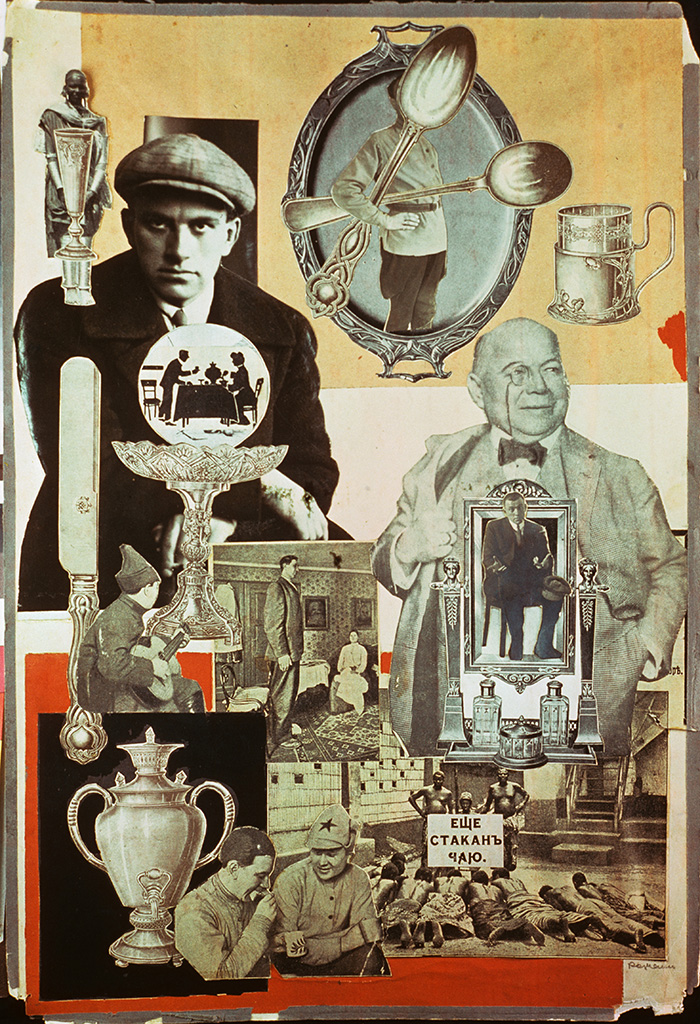
Fig. 1. — Brigade KGK (Viktor Koretsky [1909–98], Vera Gitsevich [1897–1976], and Boris Knoblok [1903–84]). “We had to overcome among the people in charge of trade the unhealthy habit of distributing goods mechanically; we had to put a stop to their indifference to the demand for a greater range of goods and to the requirements of the consumers.” From the 16th to the 17th Congress of the All-Union Communist Party (Bolsheviks), 1934, no. 57, gelatin silver print, 22.7 × 17 cm. Los Angeles, Getty Research Institute, 2014.R.25.
Fig. 2. — Brigade KGK (Viktor Koretsky [1909–98], Vera Gitsevich [1897–1976], and Boris Knoblok [1903–84]). “There is still among a section of Communists a supercilious, disdainful attitude toward trade in general, and toward Soviet trade in particular. These Communists, so-called, look upon Soviet trade as a matter of secondary importance, not worth bothering about.” From the 16th to the 17th Congress of the All-Union Communist Party (Bolsheviks), 1934, no. 56, gelatin silver print, 22.7 × 17 cm. Los Angeles, Getty Research Institute, 2014.R.25.
Collage of photographs showing Vladimir Mayakovsky surrounded by a silver samovar, cutlery, and trays; two soldiers enjoying tea; a giant man in a bourgeois parlor; and nine African men lying prostrate before three others who hold a sign that reads, in Cyrillic letters, “Another cup of tea.”
Fig. 3. — Aleksandr Rodchenko (Russian, 1890–1956). Draft illustration for Vladimir Mayakovsky’s poem “Pro eto,” accompanied by the lines “And the century stands / Unwhipped / the mare of byt won’t budge,” 1923, cut-and-pasted printed papers and gelatin silver photographs, 42.5 × 32.5 cm. Moscow, State Mayakovsky Museum. Art © 2024 Estate of Alexander Rodchenko / UPRAVIS, Moscow / ARS, NY. Photo: Art Resource.
Fig. 4. — Boris Klinch (Russian, 1892–1946). “Krovovaia sobaka,” Noske (“The bloody dog,” Noske), photomontage, 1932. From Proletarskoe foto, no. 11 (1932): 29. Los Angeles, Getty Research Institute, 85-S956.
Fig. 5. — Brigade KGK (Viktor Koretsky [1909–98], Vera Gitsevich [1897–1976], and Boris Knoblok [1903–84]). “We have smashed the enemies of the Party, the opportunists of all shades, the nationalist deviators of all kinds. But remnants of their ideology still live in the minds of individual members of the Party, and not infrequently they find expression.” From the 16th to the 17th Congress of the All-Union Communist Party (Bolsheviks), 1934, no. 62, gelatin silver print, 22.7 × 17 cm. Los Angeles, Getty Research Institute, 2014.R.25.
Fig. 6. — Brigade KGK (Viktor Koretsky [1909–98], Vera Gitsevich [1897–1976], and Boris Knoblok [1903–84]). “There are two other types of executive who retard our work, hinder our work, and hold up our advance. . . . People who have become bigwigs, who consider that Party decisions and Soviet laws are not written for them, but for fools. . . . And . . . honest windbags (laughter), people who are honest and loyal to Soviet power, but who are incapable of leadership, incapable of organizing anything.” From the 16th to the 17th Congress of the All-Union Communist Party (Bolsheviks), 1934, no. 70, gelatin silver print, 22.7 × 17 cm. Los Angeles, Getty Research Institute, 2014.R.25.
Fig. 7. — Artist unknown. “The Social Democrat Grzesinski,” from Proletarskoe foto, no. 3 (1932): 7. Los Angeles, Getty Research Institute, 85-S956.
Fig. 8A. — Pavel Petrov-Bytov (Russian, 1895–1960), director. Screen capture from the film Cain and Artem, 1929. Image courtesy University of California, Berkeley, Berkeley Art Museum and Pacific Film Archive Library.
Fig. 8B. — Pavel Petrov-Bytov (Russian, 1895–1960), director. Screen capture from the film Cain and Artem, 1929. Image courtesy University of California, Berkeley, Berkeley Art Museum and Pacific Film Archive Library.
Fig. 8C. — Pavel Petrov-Bytov (Russian, 1895–1960), director. Screen capture from the film Cain and Artem, 1929. Image courtesy University of California, Berkeley, Berkeley Art Museum and Pacific Film Archive Library.
Fig. 9. — Herbert George Ponting (English, 1870–1935). Camera Caricature, ca. 1927, gelatin silver prints mounted on card, 49.5 × 35.6 cm (grid). London, Victoria and Albert Museum, RPS.3336–2018. Image © Royal Photographic Society Collection / Victoria and Albert Museum, London.
Fig. 10. — Aleksandr Zhitomirsky (Russian, 1907–93). “There are lucky devils and unlucky ones,” cover of Front-Illustrierte, no. 10, April 1943. Prague, Ne Boltai! Collection. Art © Vladimir Zhitomirsky.
of