1. Standard Oriya Keyboard Layout
High resolution image suitable for printing.
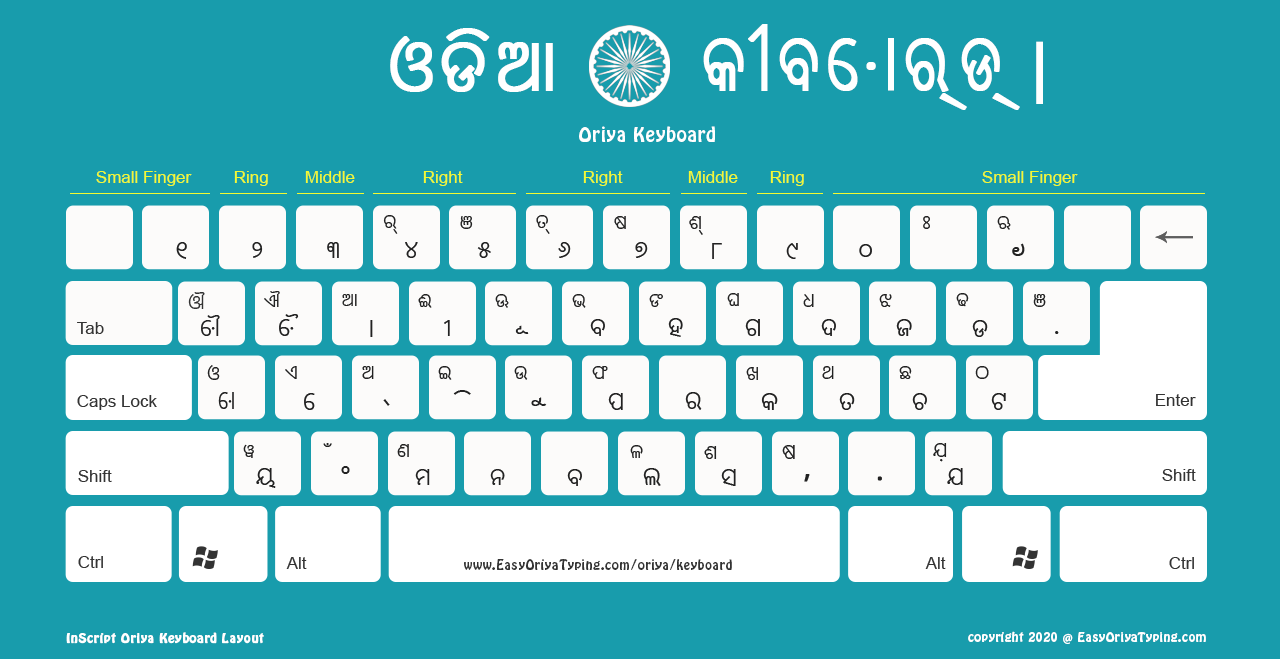
We have five different Oriya keyboard layouts for you to download on your computer. Once downloaded — you can use it as a reference to type in Oriya either on Word document or any other text editor. You also need to download the matching Oriya fonts.
High resolution image suitable for printing.
High resolution image suitable for printing.
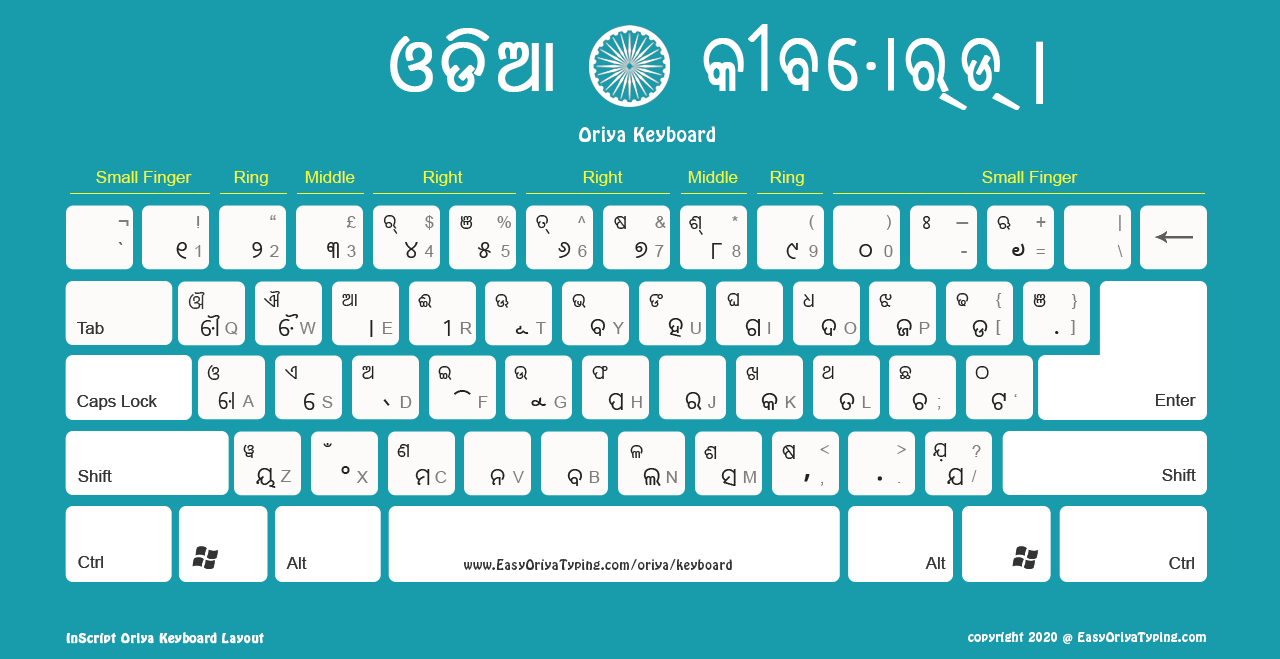
High resolution image suitable for printing.
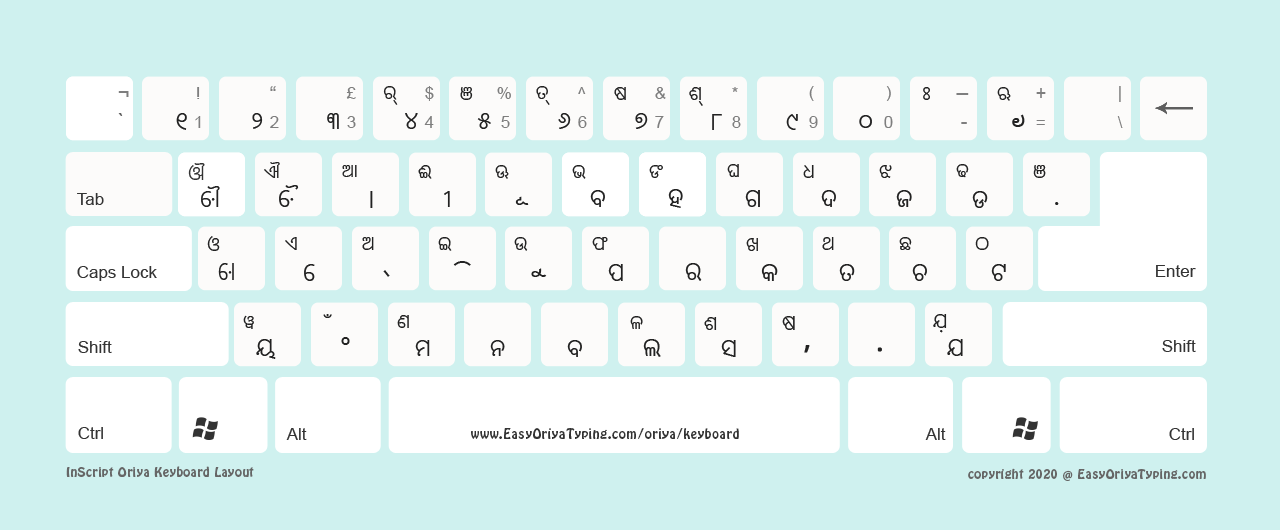
High resolution image suitable for printing.
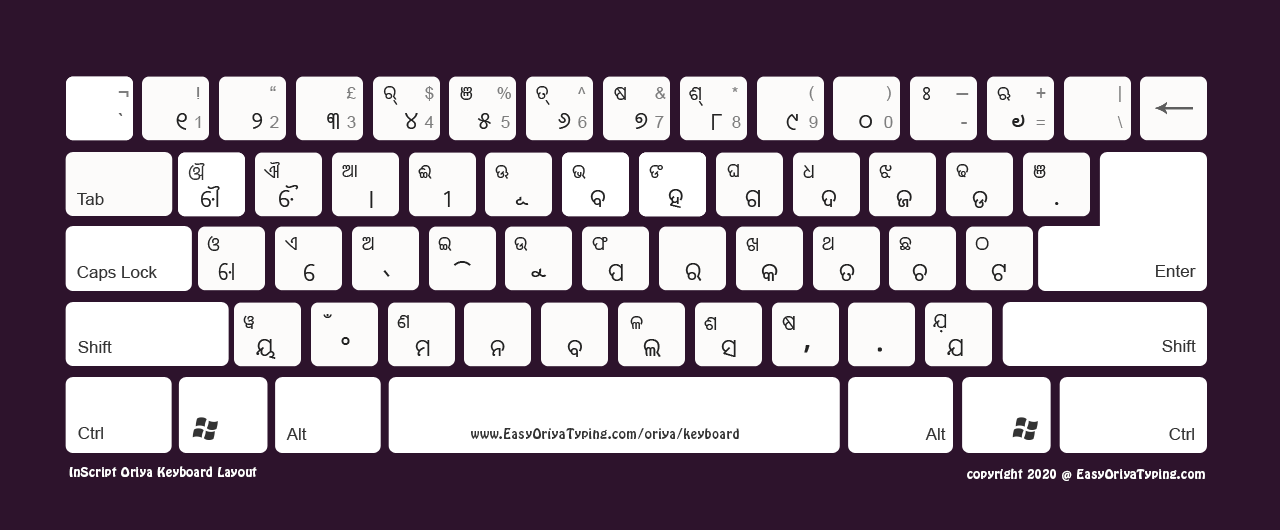
High resolution image suitable for printing.
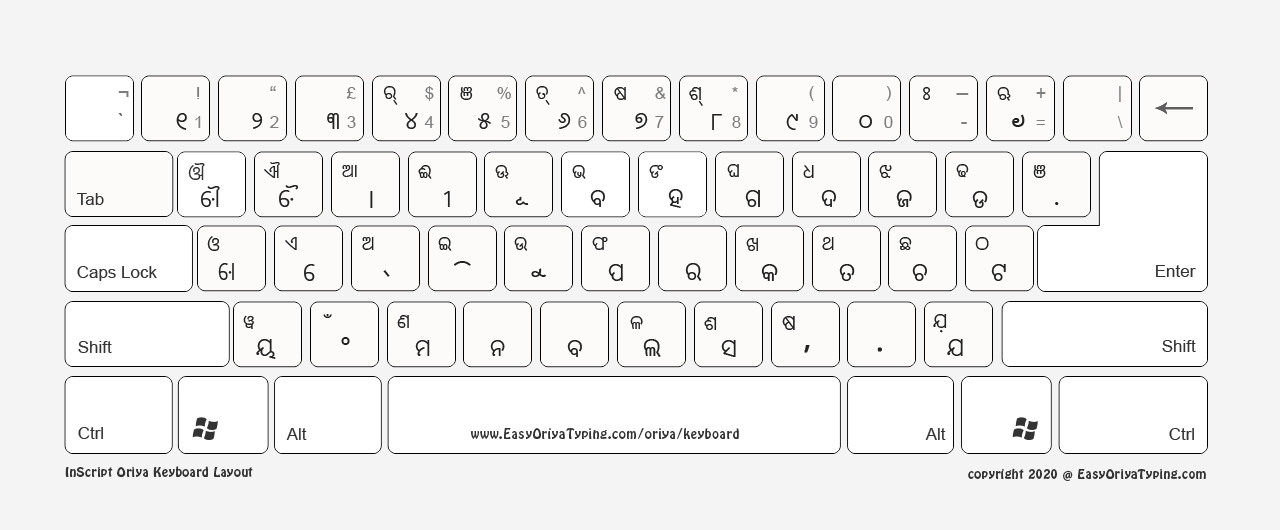
Getting started with Oriya typing is simple! Follow our step-by-step process.
Install Odia font — head over to our extensive fonts repository and install your preferred typeface.
Download your ideal keyboard image through this simple downloading process:
Browse and click on your preferred keyboard style
Right-click anywhere on the enlarged image
Choose "Save image as..." and pick your storage location
Prepare your writing space by launching your go-to text application and activating the Oriya font you installed in step one.
Begin your Oriya writing journey! Display your keyboard reference image alongside your text editor for seamless typing guidance.
Space-saving tip: Working on a compact setup? Our high-resolution keyboards deliver stunning print quality — create a physical reference that's always within reach!
Ensures traditional accuracy — each layout preserves authentic Oriya script conventions and cultural writing traditions.
Offers complete flexibility — choose from multiple styles and backgrounds to match your personal or professional preferences.
Includes unrestricted usage rights — download, print, share, and modify for any purpose without limitations or hidden costs.
In conclusion, the keyword "calmos1976dvdripxvidavi upd" serves as a reminder of the complex and ever-changing world of digital video. While it's essential to understand the technical aspects of video codecs and file formats, it's equally important to acknowledge the importance of respecting intellectual property rights and adhering to applicable laws and regulations.
The world of digital video has undergone significant transformations over the years, with various codecs and file formats emerging to cater to changing user needs and technological advancements. One such example is the "calmos1976dvdripxvidavi upd" keyword, which seems to be related to video encoding and file sharing. In this article, we'll explore the concepts behind video codecs, file formats, and the implications of using such keywords.
As the demand for high-quality, high-efficiency video content grows, we can expect further innovations in video codecs and file formats. The use of artificial intelligence, machine learning, and cloud-based processing will likely play a significant role in shaping the future of digital video. calmos1976dvdripxvidavi upd
The digital video landscape continues to evolve, with modern codecs like H.264, H.265, and VP9 offering improved compression efficiency and quality. New file formats, such as MP4 (MPEG-4 Part 14), have become widely adopted due to their flexibility and compatibility.
The AVI file format, introduced by Microsoft in 1992, is a container format that stores audio and video data. AVI files can contain various types of audio and video codecs, including Xvid. However, the format has some limitations, such as the lack of support for modern codecs and limited metadata capabilities. The use of artificial intelligence, machine learning, and
The use of keywords like "calmos1976dvdripxvidavi upd" raises questions about copyright, content distribution, and digital rights management. While it's essential to acknowledge the convenience of file sharing and online content distribution, it's equally important to respect intellectual property rights and adhere to applicable laws and regulations.
In the 1990s and early 2000s, new codecs emerged, including DivX, Xvid, and AVI (Audio Video Interleave). These formats gained popularity for their ability to compress video files while maintaining relatively good quality. Xvid, in particular, became a widely used codec for sharing and distributing digital video content. new codecs emerged
Video codecs are essential components in digital video processing, as they enable the compression and decompression of video data. The first video codecs were developed in the 1980s, with the introduction of standards like MPEG (Moving Picture Experts Group) and H.261. These early codecs paved the way for the widespread adoption of digital video in various industries.
 Sambhu Raj Singh ·