![]() |
![]() |
![]() |
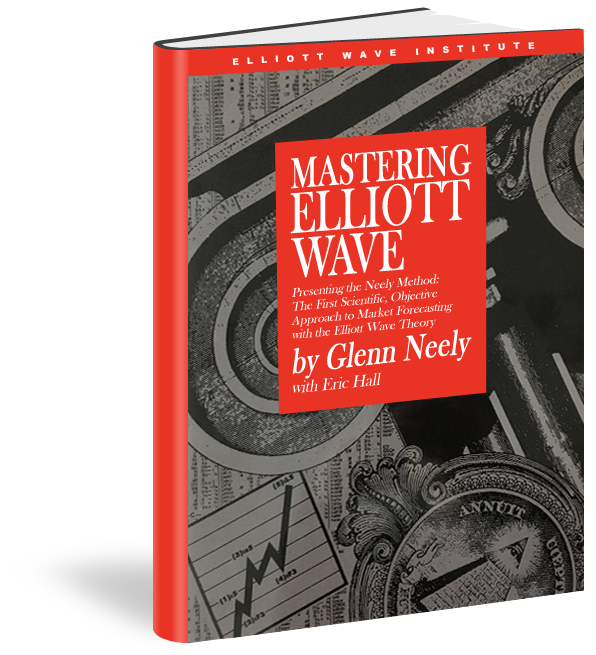
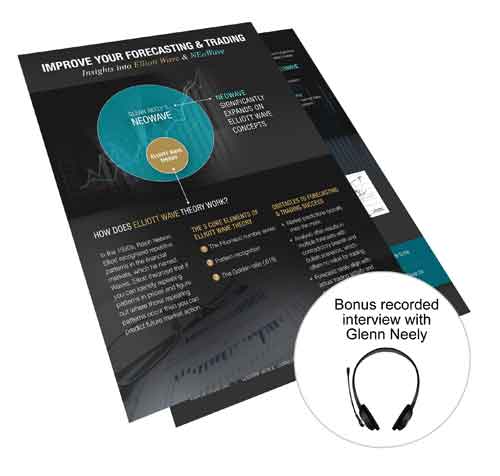
In his classic book, Mastering Elliott Wave, Glenn Neely teaches his revolutionary approach to Wave theory, called NEoWave (advanced Elliott Wave). Continuously in print since its publication in 1990, this groundbreaking book changed Wave theory forever thanks to these scientific, objective, and logical enhancements to Wave forecasting. Step-by-step, Mr. Neely explains his advanced techniques and new discoveries.
Start reading chapter 1 below...
Ultimately, the decision to take risks in business is a personal one. Layla will need to weigh her own risk tolerance and financial situation against her goals and aspirations. However, with careful planning and a solid understanding of her market and financial situation, she can make informed decisions that set her up for success.
The first step for Layla is to assess the potential risks and rewards. What are the potential benefits of launching her business, and how do they outweigh the potential costs? Are there any potential roadblocks or challenges that she could face, and how can she mitigate them?
One of the key things that Layla will need to consider is her target market. Who are her ideal customers, and what are their needs and pain points? How can she tailor her product or service to meet those needs, and what kind of marketing and outreach efforts will she need to undertake to reach them?
Let's consider a hypothetical example. Imagine an entrepreneur named Layla who has a vision for a new business venture. She's done her research, and she believes that there's a gap in the market for a product or service that she's uniquely positioned to provide. However, she knows that launching this venture will require her to take some risks.
In the world of business, there's no one-size-fits-all approach to taking risks. However, by being thoughtful and intentional in her decision-making, Layla can minimize her exposure to potential pitfalls while maximizing her potential for reward.
In the world of business, taking risks is often a necessary step towards achieving success. Many entrepreneurs and business leaders will attest to the fact that playing it too safe can sometimes lead to stagnation and a lack of innovation. However, taking risks doesn't mean being reckless; rather, it involves making calculated decisions that balance potential rewards with potential pitfalls.
Ultimately, the decision to take risks in business is a personal one. Layla will need to weigh her own risk tolerance and financial situation against her goals and aspirations. However, with careful planning and a solid understanding of her market and financial situation, she can make informed decisions that set her up for success.
The first step for Layla is to assess the potential risks and rewards. What are the potential benefits of launching her business, and how do they outweigh the potential costs? Are there any potential roadblocks or challenges that she could face, and how can she mitigate them? MissaX.2023.Layla.Jenner.Risque.Business.Part.1...
One of the key things that Layla will need to consider is her target market. Who are her ideal customers, and what are their needs and pain points? How can she tailor her product or service to meet those needs, and what kind of marketing and outreach efforts will she need to undertake to reach them? Ultimately, the decision to take risks in business
Let's consider a hypothetical example. Imagine an entrepreneur named Layla who has a vision for a new business venture. She's done her research, and she believes that there's a gap in the market for a product or service that she's uniquely positioned to provide. However, she knows that launching this venture will require her to take some risks. The first step for Layla is to assess
In the world of business, there's no one-size-fits-all approach to taking risks. However, by being thoughtful and intentional in her decision-making, Layla can minimize her exposure to potential pitfalls while maximizing her potential for reward.
In the world of business, taking risks is often a necessary step towards achieving success. Many entrepreneurs and business leaders will attest to the fact that playing it too safe can sometimes lead to stagnation and a lack of innovation. However, taking risks doesn't mean being reckless; rather, it involves making calculated decisions that balance potential rewards with potential pitfalls.